Introduction: Why People Are Asking This Question
Many people search for phrases like “one nation under God meaning,” “when was under God added to the pledge,” and “is it constitutional?” because they are trying to understand what these words actually mean in modern America.
The phrase appears simple, but it connects deeply to history, identity, faith, and national unity. To understand it fully, we need to look at where it came from, why it was added, and what it represents today in American culture.
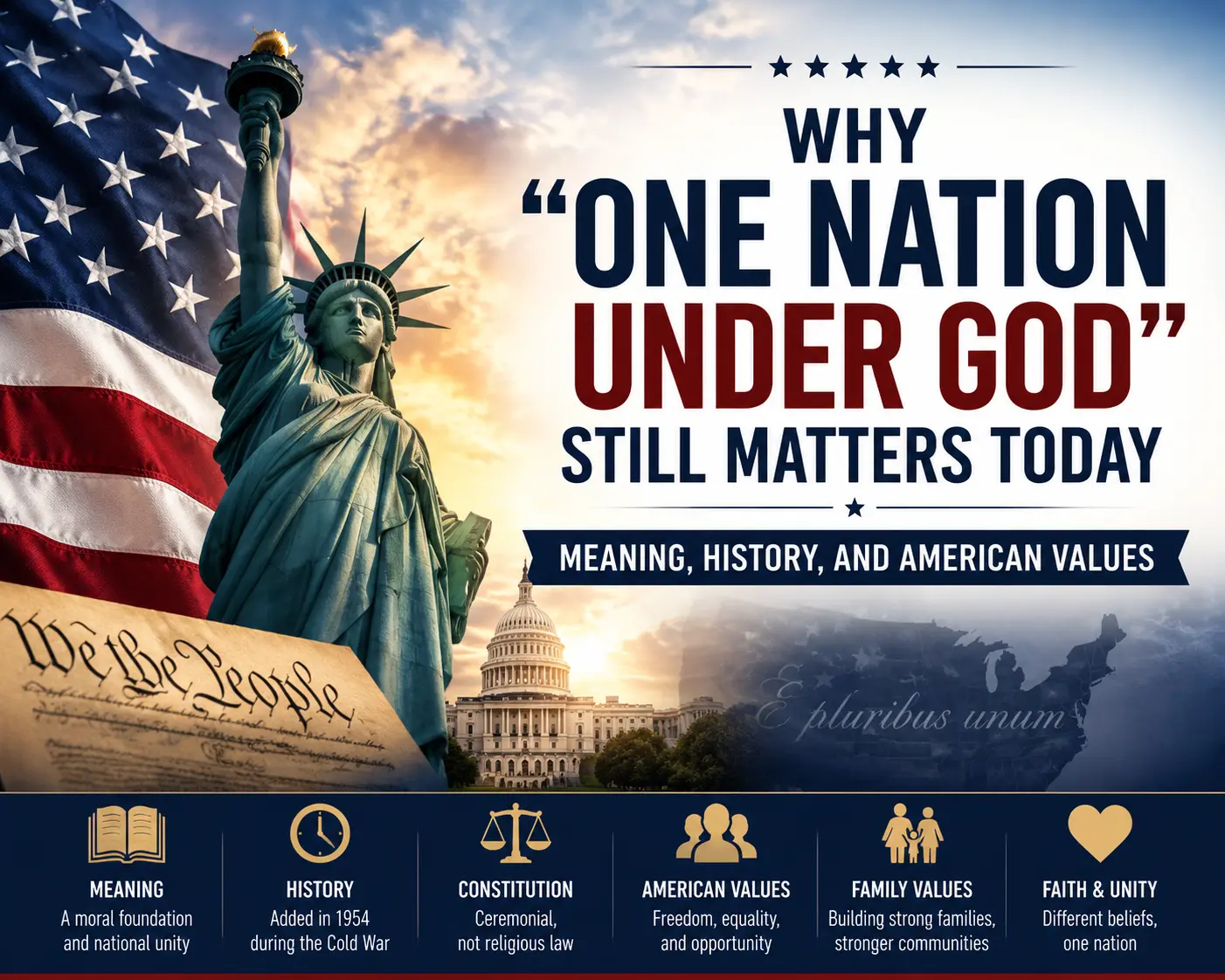
The Meaning of “One Nation Under God”
At its core, “one nation under God” is a phrase from the U.S. Pledge of Allegiance. It expresses the idea that the nation is united under a higher moral authority, often understood as God.
For many Americans, it symbolizes:
- A shared moral foundation
- National unity beyond political differences
- Recognition of faith in public life
- The idea that rights come from something higher than government
This is closely tied to the broader concept of American civil religion, where faith and national identity often overlap in symbolic ways.
History: When Was “Under God” Added to the Pledge?
A common question is: “When was ‘under God’ added and why?”
The phrase was officially added to the Pledge of Allegiance in 1954 during the Cold War era.
Why it was added:
- To distinguish the United States from atheistic communist states
- To reinforce national unity during a tense global period
- To reflect the cultural belief in God that was common in American society at the time
Before 1954, the original Pledge did not include the words “under God.” It was added by Congress and signed into law by President Dwight D. Eisenhower.
Is “Under God” Constitutional?
This question often appears in searches like “is under God unconstitutional” or “does it violate separation of church and state.”
The U.S. Constitution includes the principle of separation of church and state, which means the government cannot establish an official religion or force religious belief.
However, courts have generally ruled that:
- The phrase is considered ceremonial and patriotic, not religious enforcement
- It does not require individuals to believe in God
- It reflects historical and cultural tradition rather than religious law
That said, debate still exists. Some argue it should remain as a cultural tradition, while others believe it excludes non-religious citizens.
What the Founding Fathers Believed About God
Many people also ask: “What did the Founding Fathers believe?”
The Founding Fathers held a variety of beliefs. Some were deeply religious, while others leaned toward Deism—a belief in a creator who does not directly intervene in human affairs.
What they largely agreed on:
- Moral order is important for a functioning society
- Liberty requires responsibility
- Government should not control religion
This balance is why America developed both religious freedom and civic symbolism tied to faith.
What “Under God” Means for America Today
Today, “one nation under God” is interpreted in different ways:
For many Americans:
- A reminder of shared values
- A symbol of unity and moral direction
- A reflection of cultural heritage
For others:
- A contested phrase in a diverse society
- A topic in ongoing debates about inclusion
- A reminder of changing cultural identity
Despite differences, it continues to spark important conversations about what America stands for.
American Values: The Foundation of National Identity
To understand the phrase fully, it helps to look at broader American values.
Commonly recognized core values include:
- Freedom and liberty
- Equality under the law
- Hard work and opportunity
- Democracy and civic participation
- Justice and fairness
These values come from founding principles and continue to shape national identity today.
Why these values matter:
They are meant to unite people across backgrounds, beliefs, and regions into a shared national vision.
Conservative Values and Traditional Beliefs
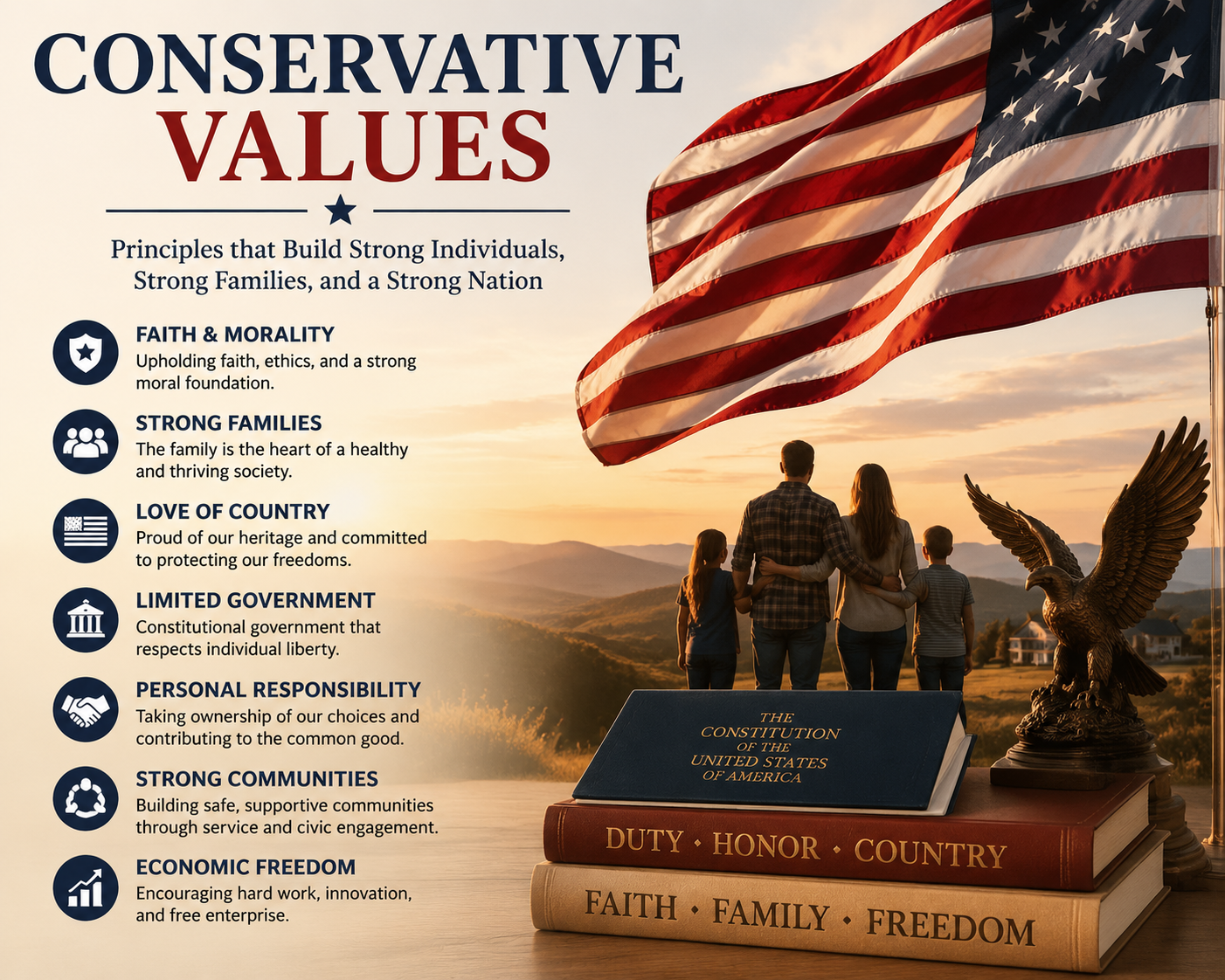
When people search “what are conservative values” or “traditional values meaning,” they are often trying to understand a perspective built around stability and continuity.
Core themes often include:
- Family responsibility
- Respect for tradition
- Strong national identity
- Personal accountability
- Faith and moral grounding
- Limited government involvement
Rather than focusing only on politics, these values are often rooted in the idea of preserving long-standing cultural foundations.
Family Values: The Foundation of Society
One of the most powerful parts of American cultural discussion is family values.
People often ask: “Why are family values important?”
Family values typically include:
- Respect between generations
- Responsibility and discipline
- Care for children and elders
- Stability in the home
- Teaching honesty and integrity
Strong families often lead to stronger communities, and many believe stronger communities lead to a stronger nation.
Are American Values Changing?
A frequent question today is whether American values are changing.
The truth is:
- Some values remain constant (freedom, opportunity, justice)
- Others evolve with society (culture, communication, diversity)
Debates often arise when people feel traditional values are weakening or when others believe society is becoming more inclusive and modern.
Change is not new—it has always been part of American history.
Why Faith and Unity Still Matter
Across history, faith has played a symbolic role in American identity. For many, it represents:
- Moral guidance
- Hope in difficult times
- A shared cultural reference point
At the same time, unity does not require uniform belief. America’s strength has often come from its ability to hold different perspectives under shared civic values.
Conclusion: What “One Nation Under God” Means Today
The phrase “one nation under God” is more than just words in a pledge. It reflects a long history of American identity shaped by faith, freedom, and unity.
Whether people interpret it as:
- A religious statement
- A cultural tradition
- Or a historical symbol
It continues to raise important questions about who Americans are and what they believe together.
Final takeaway:
America’s strength has always come from shared values—freedom, responsibility, faith in many forms, and a commitment to unity despite differences.
Frequently Asked Questions
Common questions people search for about “One Nation Under God” and its meaning in American culture.